
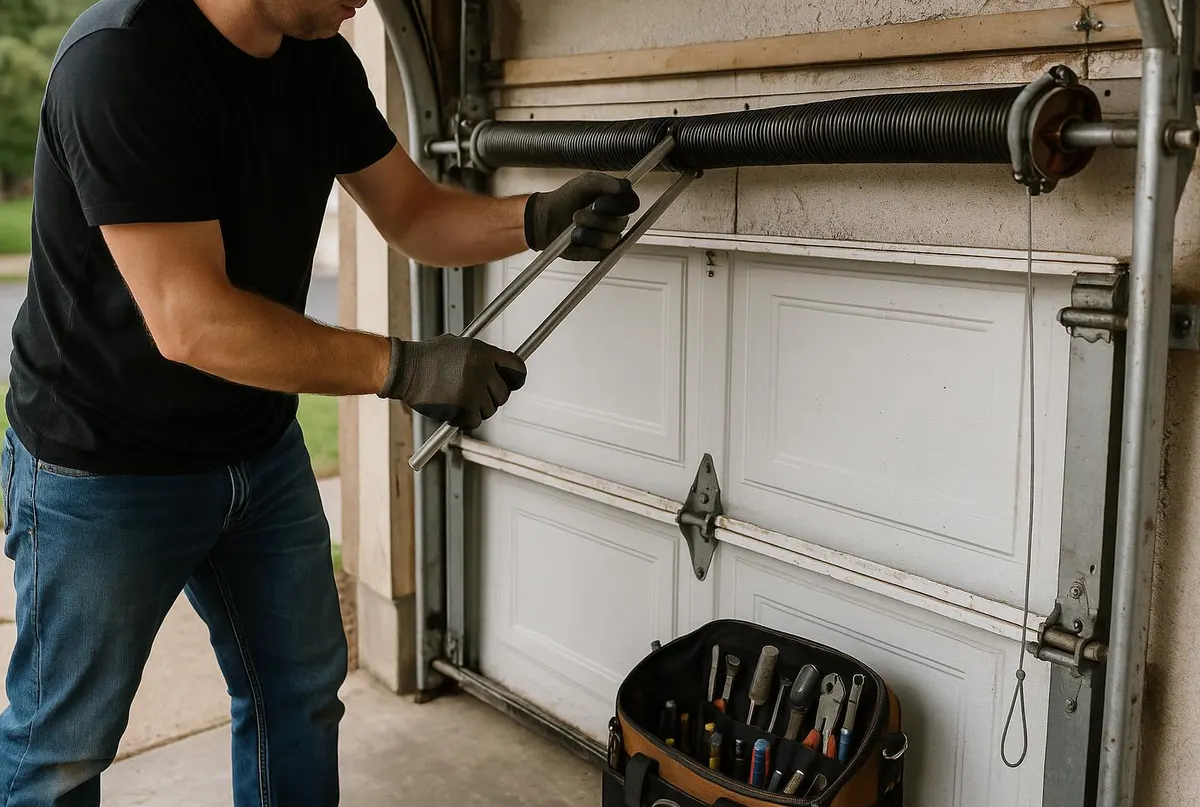
The Power Flickers Off, and You're Standing in Front of a Door That Won't Budge
It's a nor'easter night, the wind is doing its thing against the siding, and the power just went out. You hit the wall button out of habit. Nothing. You try the remote in your car. Nothing. Your garage door is sitting there, closed, with your car trapped behind it and no obvious way to get it open. This happens a lot more in this part of New Jersey than people expect, between winter storms knocking out lines and older homes on circuits that aren't always the most resilient. The good news: almost every garage door opener has a manual release built in for exactly this situation, and operating it safely is well within reach for most homeowners.
Tools You'll Want Before You Start
- A flashlight or headlamp — garages lose their overhead light along with everything else, and you'll want both hands free.
- A step stool if your opener rail is mounted high or you're on the shorter side; you need to reach the release cord comfortably, not on your tiptoes.
- Work gloves — the release cord and track can be gritty, and in winter they're often cold enough to bite.
- An ice scraper or old towel if there's any chance the bottom seal has frozen to the slab, which is common after freeze-thaw cycles turn melted snow into a sheet of ice overnight.
How to Manually Open the Door When There's No Power
- Check for ice before you pull on anything. If the bottom weatherseal looks frozen to the garage floor, don't force the door. Gently break the ice along the seal first with a scraper, working from the outside if you can. Pulling a frozen door upward can bend the bottom panel or pop it off the track.
- Find the emergency release cord. It's the red handle hanging from a cord along the opener's rail, usually a foot or two in front of the motor unit.
- Pull the cord down and toward the back of the opener (away from the door). This disconnects the trolley from the drive carriage, which is what lets you move the door by hand instead of through the motor.
- Lift the door slowly and evenly, using both hands near the center. A properly balanced door should feel light and should stay in place if you let go halfway up. If it feels heavy, drops on its own, or needs real muscle to lift, stop there — that's a spring tension problem, not something to push through by hand.
- Once it's up, prop it or leave it fully open if you need the car out right away. Don't leave it halfway, since an unbalanced door left partway up can slam down unexpectedly.
How to Close It Again by Hand
- Pull the door down using the exterior handle or pull rope, not the release cord, guiding it the last foot or so so it seats evenly against the weatherstripping.
- Make sure it's fully seated against the floor on both sides, not cocked or resting on one corner, which can happen on older tracks that have shifted slightly over the years.
- Remember the trolley is still disconnected. The door is now manual-only. It won't respond to the remote or wall button even after power returns, until you reconnect the opener yourself.
Re-Engaging the Opener Once Power Comes Back
- Confirm the outlet or circuit the opener is on actually has power. Sometimes a breaker trips separately from the main outage.
- Move the door by hand to fully closed or fully open before reconnecting, so the trolley has room to travel into place.
- Pull the release cord again, or use the reconnect lever if your opener has one, to bring the trolley back into alignment with the carriage.
- Test it with the remote or wall button for a short, slow movement. You should hear and feel the trolley click or lock into the carriage within the first few inches of travel.
- Run one full open-close cycle while standing clear, watching that the door travels evenly and stops in the right spots. If you have a 2x4 handy, lay it flat under the door and trigger a close — the door should reverse on contact. If it doesn't reverse, stop using the opener and treat that as a priority repair, not a wait-and-see item.
What's Fine to Handle Yourself vs. What Needs a Technician
Operating the release cord, lifting and lowering the door by hand, and reconnecting the trolley once power is back are all normal homeowner tasks — there's no special tool or training required. Where you should stop and call for help: if the door won't stay balanced when lifted (a sign the springs are weak or breaking, which is common in older homes around here still running original hardware), if the trolley won't click back into the carriage, if the opener runs but the door doesn't move, or if the safety reverse test fails. Those point to issues inside the opener's gearing or the spring system, and pushing a door through those problems by hand can turn a quick fix into a cracked panel or a snapped cable.
When to Call Carlstadt Garage Door Works
If your door felt unusually heavy during the outage, wouldn't hold its position, or the opener won't fully reconnect once power is restored, it's worth having us take a look before the next storm rolls through. We handle spring replacement for doors that are out of balance or too heavy to lift safely, and garage door opener service for trolleys, gears, and safety sensors that aren't resetting properly after an outage. Catching it now beats finding out the hard way during the next nor'easter when you're standing in the dark trying to get the car out.
If your garage door gave you trouble during the last power outage, give Carlstadt Garage Door Works a call — we serve Carlstadt and the surrounding Bergen County area and can get your door working reliably before winter settles in for good.